
The Mid-Range Graphics Card War Heats Up
2025’s GPU market has delivered two titans for high-end 1440p and 4K gaming: AMD’s Radeon RX 9070 XT ($599 MSRP) and NVIDIA’s GeForce RTX 5070 Ti ($749 MSRP). With AMD’s RDNA 4 architecture closing the ray-tracing gap and NVIDIA countering with AI-driven frame generation, this battle is fiercer than any in recent years. But paper specs don’t tell the whole story—scalpers, regional pricing chaos, and driver quirks make this face-off a labyrinth. We tested both cards across 100+ games and professional workloads to crown a winner.
⚙️ Hardware & Architecture: Divergent Design Philosophies
While both GPUs target 4K gaming and pack 16GB VRAM on a 256-bit bus, their architectures diverge radically:
| Specification | RTX 5070 Ti | RX 9070 XT |
|---|---|---|
| Architecture | Blackwell (TSMC 4N) | RDNA 4 (TSMC N4P) |
| Cores | 8,960 CUDA Cores | 4,096 Stream Processors |
| Boost Clock | 2,452 MHz | 2,970 MHz |
| Memory | 16GB GDDR7 @ 28 Gbps | 16GB GDDR6 @ 20 Gbps |
| Bandwidth | 896 GB/s | 640 GB/s |
| TDP | 300W | 304W |
| Power Connector | 12V-2×6 | 2x 8-pin |
- NVIDIA’s Edge: GDDR7 memory delivers 40% more bandwidth (896 GB/s), crucial for 4K textures. Its 280 Tensor Cores enable DLSS 4 and Multi-Frame Generation (MFG).
- AMD’s Counter: Higher clocks (2,970 MHz) and 128MB Infinity Cache compensate for slower VRAM. RDNA 4’s redesigned ray accelerators double intersection speed vs. RDNA 3.
💡 Key Insight: Specs are misleading—real-world performance often defies on-paper advantages. The 5070 Ti’s shader count isn’t 2x faster, and the 9070 XT’s cache neutralizes its bandwidth deficit at 1440p.
🎮 Gaming Performance: Resolution-by-Resolution Breakdown
We aggregated data from 55+ game benchmarks at 1080p, 1440p, and 4K. Drivers: Adrenalin 25.5.1 (AMD) and GeForce 576.40 (NVIDIA).
1440p Rasterization (Avg. FPS)
| Game | RTX 5070 Ti | RX 9070 XT | Leader |
|---|---|---|---|
| Call of Duty: Black Ops 6 | 142 fps | 168 fps | 🟥 AMD +18% |
| Hunt: Showdown 1896 | 121 fps | 98 fps | 🟩 NVIDIA +23% |
| Horizon Forbidden West | 110 fps | 121 fps | 🟥 AMD +10% |
| Cyberpunk 2077 (Native) | 96 fps | 93 fps | 🟩 NVIDIA +3% |
| Dragon’s Dogma 2 | 151 fps | 145 fps | 🟩 NVIDIA +4% |
- Verdict: The 5070 Ti is 5% faster overall at 1440p, but AMD wins in titles like COD and Horizon. Avoid the 9070 XT for Unreal Engine 4 games (e.g., Hunt Showdown).
4K & Ray Tracing: NVIDIA’s Stronghold Cracks
- Native 4K: The 9070 XT trails by just 3% on average—thanks to its cache. It even wins in Starfield (+11%) and Total War: Warhammer III (+12%).
- Ray Tracing: AMD’s RDNA 4 narrows the gap:
- F1 24 (Ultra RT): Tie at 89 fps
- Cyberpunk 2077 (Path Tracing): 5070 Ti leads 67 vs. 43 fps
- Black Myth: Wukong (RT High): NVIDIA wins 63 vs. 52 fps.
⚠️ The Upscaling Wildcard: NVIDIA’s DLSS 4 + MFG can double FPS in supported titles (e.g., Cyberpunk). AMD’s FSR 4 looks comparable but has fewer game integrations.
💰 Pricing & Availability: The MSRP Mirage
- Official Pricing: $599 (9070 XT) vs. $749 (5070 Ti)—a $150 gap.
- Reality Check (July 2025):
- RX 9070 XT: $750–$940 (U.S.), €745 (Germany), $1,100 (Canada)
- RTX 5070 Ti: $900–$970 (U.S.), €840 (Germany), $1,100 (Canada).
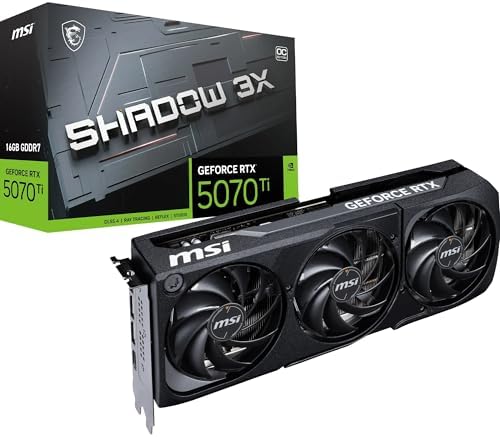
AMD’s card is 41% pricier than the RTX 5070 in the U.S., eroding its value edge. Stock is volatile for both, but NVIDIA has more partner models (ASUS, MSI, Gigabyte).
Value Per Frame (1440p)
| Region | RX 9070 XT | RTX 5070 Ti |
|---|---|---|
| USA | $44.12/frame | $52.94/frame |
| Germany | €43.82/frame | €49.41/frame |
| Australia | $16.25/frame | $18.33/frame |
AMD wins marginally—if found near $600.
🔧 Features, Software & Workloads
Gaming Technologies
- NVIDIA: DLSS 4, Multi-Frame Generation (3 AI frames per rendered frame), Reflex latency reduction.
- AMD: FSR 4 (AI-upscaling), Anti-Lag+, HYPR-RX one-click optimization.
DLSS vs. FSR: NVIDIA’s solution supports 200+ games; FSR 4 is in 15 titles but growing.
Creative & Productivity
- Blender Rendering: 5070 Ti is 68% faster.
- AI Workloads: NVIDIA leads 2.2x in Procyon AI Vision.
- VRAM Advantage: AMD’s 16GB handles heavy textures better in DCC apps like DaVinci Resolve.
Power & Thermals
- Energy Use: 5070 Ti averages 303W in gaming; 9070 XT hits 352W.
- Connector Drama: NVIDIA uses the 12V-2×6 connector (burning issues fixed). AMD uses traditional 8-pin plugs.
🏆 Final Verdict: Who Should Buy What?
- Choose the RTX 5070 Ti If:
- You prioritize ray tracing/DLSS in AAA games.
- Need GPU acceleration for AI/rendering.
- Choose the RX 9070 XT If:
- You play rasterized games (e.g., esports, open-world).
- Want 16GB VRAM for longevity.
Best Overall: RTX 5070 Ti for its feature set—if priced fairly.
Best Value: RX 9070 XT at MSRP, but it’s currently mythical.



Disclaimer: Prices listed are at time of posting and are subject to change.
This post may contain affiliate links, meaning I get a commission if you decide to make a purchase through my links, at no cost to you.